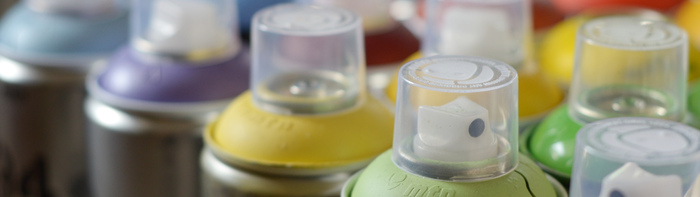
This is a short overview over the most common spray cans (at least in Europe) from various brands. I try to show the difference between the cans and the pros and cons. All available data sheets and the brand web sites are linked.
Note: Experience with cans is always subjective and not facts. YMMV. No guarantee for correctness.
For a cap list see here.
- General tips
- Health
- High Pressure and Low Pressure Cans
- Peas
- A note about metal colours
- Mixing different brands
- Montana mtn colors
- MOLOTOW
- NBQ
- Ironlak
- Montana
- Can History—No Longer Available
- Links
General tips
(This is not a spray paint brand)
- Clogged caps
- Caps can clog (block) for multiple reasons (for cans, see below).
- The main reason is paint drying in the cap after usage. When paint is dry, it will take a long time until it is resolved by the solvent (if at all). You will often read/hear the tip to turn the can upside down and spray until no more paint is expelled, only propellant (may take 5+ seconds). This will blow out some paint. This never really worked for me (I still had to throw caps away after using them only once or twice).
- What really does work is to blow out the caps with solvent like the mtn Solvent after usage. This cleans the cap from any paint remaining inside (if it has not dried yet) and the cap will not clog at all. I additionally clean the dot with a paper towel and some solvent, afterwards they look and feel like never used.
- If the cap still seems to have reduced output after cleaning it, or if paint continues to bubble out of the can for a moment after releasing pressure on the cap, it is time to replace the cap. Dried paint will remain dry pretty much forever (unless you maybe soak it in solvent).
- Another reason for clogging are pigment clots from a can that has not been shaken well enough. Be it due to the thick paint (ironlak) or due to large paint particles (mtn 94). The solution is easy; shake them long enough before using (one minute, ironlak even longer). Low temperatures may result in too low pressure and support clogging as well.
- Not having to worry about semi-clogged caps and about getting new ones every day is worth the little extra effort, at least for me.
- Clogged cans
- Also cans can clog, mainly for two reasons: Either because of dry paint in the valve, or when the can was unused for some time—usually after some months.
- The valve is cleaned by pushing down the cap (use a fat cap) with the left thumb and rotating the can with the right hand. It should work again after a few seconds.
- Old cans need a bit more patience because in this case, the paint particles have settled on the bottom of the can and form a thick mud. If you shake the can, you will not hear the peas for the first shakes because they are stuck in the pigment mud.
- Shake really well. If you know that you are going to store the cans for a longer peroid of time, you can turn them upside down for a month or two, and normal for another month (and so on), which prevents the particles from settling. You also hardly need to shake cans anymore.
- Take the fattest fat cap and try to spray for 5 seconds. Remove it and check the stem, remove any thick paint with a toothpick—the first hard part will just clog the cap. If nothing happens, spray some solvent into the valve, mount the cap, push a few times and wait 5 minutes, then repeat.
- Repeat until the paint in the cap’s stem becomes more liquid. Note that paint flows faster, so only push down the cap for 3 or 2 seconds, and check for paint mud in the stem more often.
- If it looks soft enough and you hear some paint flowing through the cap immediately after pushing it down, hold it down for some seconds until all thick paint is gone and the paint is fresh again.
- Happens when the can is not used for a longer time, so the paint particles settle on the bottom of the can and and is not shaken well enough before using it again. I usually solve this by shaking it again and spraying some solvent into the stem and waiting for some time.
- Dripping caps
- Sometimes the can’s gasket is not in perfect condition. Then it will drip until it is empty. A workaround may be to clean the gasket with solvent.
- Sometimes it is also a cap that is not ideal for this can. Some cans like the Hardcore cans have wider holes; using a normal cap on those will usually result in leaking paint. Use a cap with a wide stem.
- Internals of a can
- The Plain Man’s Guide to Aerosols[1] explains the technical aspects around spray paint cans. Also how the valve works.
- mtn 94 and Molotow Premium use identical valves, apparently developed by Molotow.
Health
+ Care

Spray paint is not medicine. Even if the paint does not contain heavy metals like lead and other poisonous ones anymore today, it still uses orgainc solvents. Most of them, like Acetone, are declared as Xi (irritant), but all spray paints also contain solvents declared Xn (Harmful). These are Xylenes, Ethylbenzene, 2-Butoxyethanol, and Naphtha. The MSDS (Material Safety Data Sheet) for the spray paints shows the following values after summing up the Xn ingredients (sorted by the maximum value) – just to give you a rough idea of how much it actually is:
| Brand | Percentage of Xn |
|---|---|
| Molotow | 2.5–7.5 % |
| Sabotaz | 1–10 % |
| Montana Gold | 14–29 % |
| mtn 94 | 2.5–15 % |
| mtn Hardcore 2 | 15–30 % |
| mtn Water Based | 0 % |
| Ironlak | 12.5–35 % |
| mtn Alien | 15–37.5 % |
| mtn Hardcore | 15–37.5 % |
-
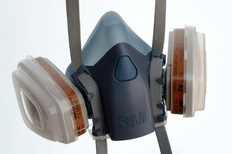
- 3M 7500 with A2 and P2 filters. The P2 covers the A2.

These don't only get into your body by inhalation but also by skin contact. And, to quote Ironlak’s MSDS, Xn may mean:
- … may result in adverse health effects such as mucous membrane and respiratory system irritation and adverse effects on kidney, liver, and central nervous system.
While temporary (reversible) symptoms like skin/eye irritation and drowsiness are something you can live with, chronic diseases are most likely not something you want. Most important protection measures are mask and gloves. The mask must have at least an organic filter (A1 or better) and a particle filter (P1 or better). I’d go for A2P2. With the mask on, you should not smell the vapours of the spray paint anymore, otherwise the filter is used up.
Note that organic filters contain active carbon which gets used up on constant air contact. If not used, put it into a plastic bag or box and seal it, otherwise it constantly filters air. You do not want this because eventually they are used up.
Masks are particularly important when working inside where air circulation is low and you start working in a haze of spray paint droplets and organic solvents. When working, we breathe around 1000 liters of air per hour. That’s a lot of paint. Therefore: Ensure air circulation. Open the windows and, if available, use ventilators.
High Pressure and Low Pressure Cans
which one?
In a nutshell:
- Low Pressure or Variable Pressure cans allow very high control on the paint output which allows to work accurately.
- High Pressure cans are rather the on/off kind of cans with higher and faster output.
Peas
differences
-
- Normal and small peas

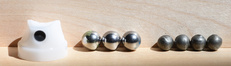
Cans have metal peas inside to speed up mixing the paint when shaking. Most cans use three iron peas, sometimes polished, sometimes not. Others use a larger number of smaller peas.
A note about metal colours
and their differences
-
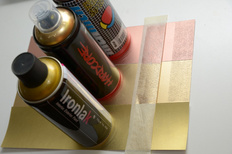
- Other metal: From Top, mtn Hardcore Copper, mtn Hardcore 2 Gold, Ironlak Gold

Most metal colours are identical. Silver always looks the same (which is quite easy since basically only aluminium powder is used. Copper additionally contains red paint, and Gold something in-between. Ironlak Gold has a greenish tint, making it look like white or yellow gold, Hardcore 2 Gold leans towards copper and is tinted more reddishly.
Molotow sells a special kind of metal paint, the action burner line: The can does not contain any peas. It still needs to be shaken however.
-
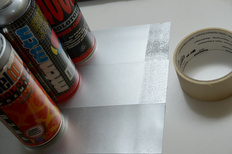
- Silver: From top, Molotow Burner Chrome, mtn Hardcore 2, Molotow Premium Silver Dollar

Another difference is how well the paint sticks to paper. I testet this by sticking some masking tape over the dry painted paper and removing it. The previously mentioned Action Burner silver is the worst and behaves almost like a thin plastic film that you can rip off in a piece, none of the tape was uncovered. Absolute winners were the Ironlak and Molotow Premium where no paint at all sticked to the tape! The Hardcore (2) cans lie between, about half of the paint got removed, but it still sticks way better than the Action Burner silver.
The mtn 94 silver sticks about as well as Hardcore 2.
Mixing different brands
— or not
-
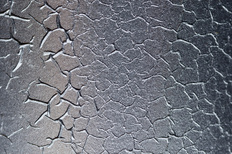
- Molotow on top of mtn 94 paint

Different brands use different solvents – which, in some cases, are incompatible. The image on the right resulted from painting with Molotow over a half-dry layer of mtn 94. You do not want to do that. A strange effect can also be observed when painting with Montana Gold over wet mtn 94; the paint appears to react like an acid and creates little blebs.
To prevent those effects from happening, you can:
- Wait until the lower layer is dry. By this I mean really dry. If you can touch it after a few minutes it still contains a lot of (less volatile) solvents. Rule of thumb: As long as it smells, it is not dry yet. One or two weeks, depending on the temperature, is a good bet. The layer of paint then just consists of pigment and some kind of (dry) adhesive. Nothing left to react.
- Wet on wet works fine in the Molotow–94 case; As long as the 94 layer is still pretty liquid, there is no layer that can be folded as seen in the image.
- Test – obviously. Usually cans are compatible. If not, maybe wet on wet still works.
Montana mtn colors
Spain (Barcelona)
The original Spanish brand. (A German company called itself Montana as well after they saw the original Montana brand was successful and failed to acquire it. The spanish brand calls itself mtn colors since.[2])
mtn colors have two different kinds of paint: High pressure (Hardcore and Hardcore 2) and low pressure (the rest). Only low-pressure cans are suitable for detailed artwork, the high pressure cans are more the on/off types, lacking fine can control, but they have higher output if necessary.
mtn 94

Introduced in 2009. Updated in 2012 with less Xylene. 25 colours added in Nov 2014.
- Properties
- Matt colors.
- Variable Pressure
- Valve identical to the one found in Molotow Premium
- Surface temperature: +5 to +50 °C
- Data Sheet (PDF) / MSDS (PDF)
- Covers 2 m²
- Two polished iron peas inside
Can be controlled very well. Produces bigger drops than other cans due to the low can pressure. Some colors tend to cause caps to clog and drip quickly when it is cold (5 °C and below), especially when working slowly, i.e. not with full output. A summer can, but beautiful to work with. Black is not matt.
Smells good, reminds of pepper balls (the sharp ones that taste like cinnamon). (Remains hazardous to health nevertheless.)
The 94 has been updated around 2011. Before the donuts (colour rings) have been spray painted and the surface felt rough. The new ones use colourized plastic (feels smooth) and smell sweeter, like the 2G. The 94 fluor smell different again, much sweeter.
The 94 cap (slightly transparent white, grey dot) does not create a circle pattern like most other caps but a dot pattern. Cool cap and may seduce you to use it all time. For sharper (or harder) edges give the Universal a chance.
Until 2014, the can was shipped with the 94 cap. Later, the Universal became default; likely because the 94 cap (and other skinny caps) tended to clog when the can was not shaken well. Shaking regularly helps. Now, all cans are shipped with the Pocket cap.
Water Based 300

Introduced in 2014.
- Properties
- 300 ml
- Water based acrylic colour (no solvents!)
- Glossy colours
- Low Pressure
- Surface temperature: +5 to +50 °C
- Covers 0.8 m²
- Data Sheet (PDF) / MSDS (PDF)
Likely inspired by Molotow’s Artist Acrylic, which is based on acrylic paint; Molotow does not provide an MSDS however, and generally is very sparse on information about their product.
The Water Based 300 only contains dimethyl ether, ethanol (alcohol), and isopropyl alcohol, which are all used in cosmetics and medicine as well, so it is safe to use indoors. As any acrylic paint, it is water resistant after drying, but can be washed out with water while still wet.

A nice feature is that the label provides additional information useful for artistic use, like the paint’s RGB/CMYK/Pantone values, and the pigments used in the paint. Pigment names are standardised and can be looked up in this Pigment Database, for example. Very nice.
Nitro 2G

- Properties
- Matt colours.
- Low Pressure.
- Covers silver.
- Data Sheet (PDF) / MSDS (PDF)
The Nitro 2G (400 ml) is very similar to the mtn 94 regarding the handling. The difference is that 2G is specially designed for covering silver that is not yet dry, and comes with a very limited colour range.
There are two versions of Nitro 2G: 400 ml and 500 ml. The 400 ml can (shown in the image) is black only. For the 500 ml can some colours are available. Including — Silver.
Alien

- Properties
- 250 ml
- Glossy Paint.
- Low Pressure.
- Scratch resistant.
- Surface temperature: +5 to +50 °C
- Data Sheed (PDF) / MSDS (PDF)
- Covers 1.25 m²
This can is, due to its size, not made for filling, but for detail work. It has the same width as the 94 cans.
Alien Espectro
Introduced in 2004.

- Properties
- 250 ml
- Transparent.
- Rest: Same as for Alien
Transparent colours can be very useful. Trying to add a dark shade around a black eye fails with an opaque dark grey since the black eye would be covered with grey as well. Transparent Black however would only slightly darken the area.
In the image on the right: Transparent Yellow.
mtn Pocket

-
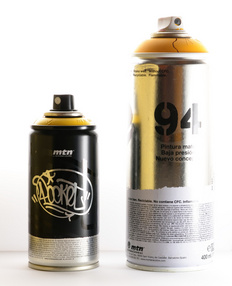
- Size comparison between 94 and pocket

- Properties
- 150 ml
- Low pressure.
- One polished iron pea inside.
- MSDS (PDF)
Not only lower (like the Alien) but also narrower than normal cans. Lower pressure than the bigger cans, therefore very good for detail work.
mtn Hardcore 2
Introduced in Spring 2012.

- Properties
- Glossy colors.
- High Pressure
- Uses an own valve with a much wider tube
- Data Sheet (PDF) / MSDS (PDF)
The updated version of the Hardcore. The handling feels identical (same pressure, most likely same valve), but the paint has been changed. Hardcore paint used to drip quickly, even more in moist weather. Hardcore 2 paint finally feels like an up-to-date paint.
Hardcore 2 cans, like the old Hardcores, have a wider stem diameter and a few caps like the Banana Yellow will only fit on those cans (amongst the ones listed here).
mtn Solvent

- Properties
- 250 ml
- Solvent only
Ideal for cleaning spray caps (when the paint is still liquid). Or anything else that became dirty. Supports all caps, also the Hardcore ones which do not fit on other cans.
Can also dissolve other synthetic material like, for example, your cool pullover (Not if it is cotton or wool, though.) or other things made of plastic.
MOLOTOW
Germany
- Links
- http://www.molotow.com/
Molotow is a German company that e.g. developed the Flowmaster valve which is used in several cans today (also in the low pressure mtn cans).
Molotow Premium 251+
Introduced in 2011.

- Properties
- Glossy
- Color Chart (PDF) / No MSDS published
This is the updated version of the Molotow Premium with a new colour system (plus additional colours) that has been developed together with MadC. It is labeled Reference Street-Art Colors and not Finest Colors anymore.
The paint still contains the same high-quality car pigments, but feels slightly thicker than the previous version.
The can comes with Belton’s soft cap.
Paper bends when painted with Molotow Premium. This is not the case for mtn 94 (and Co.), Sabotaz, and German Montana. Only the 94 Fluor do bend it slightly, and the mtn Zinc spray very much (it is not made for paper but for metal though).
NBQ
Spain
NBQ Fast

- Links
- http://www.ironlak.com/
- Properties
- Glossy.
- Paints 2.2 m² according to the Data Sheet.
- Surface temperature: +5 to +35 °C
- Colour Chart (PDF)
- Data Sheet (PDF) / MSDS (PDF)
- One (aluminium?) pea inside
NBQ Slow

NBQ H2O

Ironlak
Australia

- Links
- http://www.ironlak.com/
- Properties
- Glossy.
- Paints 2.2 m² according to the Data Sheet.
- Surface temperature: +5 to +35 °C
- Colour Chart (PDF)
- Data Sheet (PDF) / MSDS (PDF)
- One (aluminium?) pea inside
Needs to be shaken really well before using. Cap is harder to press than on other cans (a.k.a. your personal fitness trainer). Thin lines can be drawn easier than with other paints. Stinks! You'll really want to were a mask here. Ironlak has a new series called «low odour» which still smells much stronger than others.
The color of the ironlak pink I tested is strong. Pure pink. Sometimes the can clogged (yes, can, not cap), which seemed really weird to me. Using a Fatcap then solved the problem and I could continue using the Vegan.
Ironlak is the only brand listed here which does not use an iron ball, so it cannot be silenced with a magnet. (For the other cans I use magnets from www.supermagnete.ch, preferredly slices which can hold about 2 kg. Weaker magnets are too weak, stronger ones are hard to remove.)
Ironlak cans come with a Vegan Cap which is colored – guess how – pink.
Montana
Germany
The (non-original) German Montana.
Gold

- Properties
- Water based
- Low pressure
- Multiple smaller iron peas inside
- Color Chart (PDF)
- No technical data sheet / MSDS (PDF)
The Gold lies somewhere between the mtn 94 and the Molotow Premium. Pressure is slightly higher, like a Molotow can, the paint is more opaque like the 94.
When spraying a dot or a thicker layer, this paint starts building bubbles which often stay visible on paper. The same happens when spraying over wet paint with different spray paint (e.g. 94 cans). This is common when mixing solvent and acrylic based paints, though.
Black

- Properties
- High pressure
- Multiple smaller iron peas inside
- «Winter proof»
- Color Chart (PDF)
- MSDS (PDF)
Feels identical to the Gold regarding handling and paint.
When not used for a few months, these cans need to be shaken really well. The peas are small, so it happens that they stick to the bottom of the can for some time first. The cans can clog too, waiting a few minutes may fix the problem though. (So it is better to shake well ...)
Can History—No Longer Available
mtn Hardcore
Introduced in 1994. Available until 2012.

- Properties
- Glossy colors.
- High Pressure
- Uses an own valve with a much wider tube
- Surface temperature: +5 to +50 °C
- MSDS (PDF)
- Covers 3 m²[3]
- Two polished iron peas inside, and a wider dip tube than 94’s
Comes with a Banana MTN Yellow by default. It is the first spray paint created by Montana.
Some caps will only fot on mtn Hardcore. As for example the new Normal cap or the Banana Yellow.
I sometimes found the paint behave very strangely on paper. Especially Medium Blue would not dry for ages and build drops like no other color. Usually the solution to this is to use less paint, but then the surface looks extremely stainy, unevenly covered. A White can seems to have a broken gasket and drops the whole time.
Molotow Premium
Introduced in 2000. Available until around 2012.

- Properties
- Glossy.
- Surface temperature: –10 to +40 °C (Link)
- Data Sheet (PDF) / MSDS (PDF)
- 4 small iron peas inside
The paint is more liquid than e.g. Ironlak or MTN 94 paint. When going faster it produces stainy patches instead of simply blank areas when working on paper. (But this is not an issue unless you do not want to color the whole area with paint.) The paint really differs a lot from the other paints. It reminds of spray varnish (which they actually sell as well).
Molotow highlights on their webpage that their paint is using especially small color particles. Clogging caps with the black spray paint I tested was very hard.
-
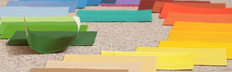
- 94 and Molotow on paper

It’s a little bit harder to get thin lines with this can than with mtn 94.
Paper bends when painted with Molotow Premium. This is not the case for mtn 94 (and Co.), Sabotaz, and German Montana. Only the 94 Fluor do bend it slightly, and the mtn Zinc spray very much (it is not made for paper but for metal though).
sabotaz

- Links
- http://www.sabotaz.com/
The sabotaz 80 cans were are produced by a Greek company called Cosmos Lac until around 2012, but they do not exist anymore.
- Properties
- Glossy.
- Surface temperature: -5 to +30 °C
- High Pressure
- Valve is nearly identical to the one used in Moltow Premium, but the tube is wider (like in a Hardcore)
- Two polished iron peas inside
- No technical data sheet / MSDS (PDF)
Really high pressure. Doing thin lines is very difficult because of the amount of paint expelled by pretty any cap on it. Due to the high pressure and the relatively liquid paint, this can forces you to work in multiple layers. On even surfaces the high gas pressure will sometimes blow fresh paint away if a layer is too fat. Useful: If caps clog with low-pressure cans, they can sometimes be saved (blown clean) with a sabotaz can.
I got best results for «thin» lines using Skinny 94 and Skinny Pro Grey. Due to the high pressure the minimum working distance is over 5 cm (for mtn 94 e.g. you can go as close as possible). Ideal for filling and for haze effects and gradients since the paint dots, when examined closely, are very fine, like dust. Dust is a good keyword: The paint is very «dusty». Use a soft cap, and half of the paint will float around in the air and your lung.
Interesting: An empty sabotaz is empty. There won’t be left even a single drop of paint. Which is really not the case for e.g. Molotow and mtn 94 cans which leave two or three millimeters of paint on the ground.
Links
and references
- ^ Original page (offline): http://www.yorks.karoo.net/aerosol/
- ^ Some links about Montana vs. Montana: http://www.mzee.com/forum/showthread.php?t=12551 (German), http://everything2.com/title/Montana+Spray+Paint, http://www.montanacolors.com/quienes2.php
- ^ mtn Hardcore coverage: Old product page